
A good coaching institute handles student stress, homesickness, and burnout by spotting warning signs early, giving every student a mentor to talk to, keeping the daily routine balanced, and making hostel life feel safe and familiar. This matters because preparing for NEET or JEE is not only about long study hours. Students also face frequent tests, high expectations, and, for many, the first long stretch away from their families.
In this blog, we explain why these problems start, how a good institute catches them early, what students can do on their own, what parents should check before admission, and how Matrix Academy supports its students.
Why Do Students Experience Stress, Homesickness, and Burnout During Competitive Exam Preparation?
Competitive exam preparation is demanding. Students must understand difficult concepts, complete a large syllabus, revise regularly, and perform well in tests. Keeping this up for a few days is easy. Keeping it up for months can make students feel they are falling behind, and that feeling slowly turns into stress.
Homesickness is common among students who move to another city or state for coaching. A new city, a hostel, a new routine and new people all take time to get used to.
Burnout develops when students study continuously without enough rest or time for things they enjoy. Repeated tests, growing backlogs, and pressure to improve scores leave them mentally exhausted.
All three can affect concentration, sleep, motivation, and confidence. That is why students need an environment where academic preparation and personal well-being get equal attention.
How Can a Good Coaching Institute Identify Student Stress Early?
Stress should be caught before it affects a student’s performance, confidence or daily routine. A good coaching institute watches for changes in behaviour and study habits instead of waiting for test scores to fall.
- Monitor changes in performance: A sudden drop in marks, incomplete assignments or repeated mistakes may mean a student needs support.
- Notice changes in classroom behaviour: Students who become unusually quiet, stop asking questions or struggle to concentrate may be under pressure.
- Conduct regular mentor interactions: One-to-one conversations help students share academic difficulties and personal concerns they may not raise in class.
- Pay attention to attendance and routine: Frequent absences, irregular study habits or trouble finishing daily tasks can signal a problem.
- Encourage students to speak openly: Students should feel safe discussing their worries without fear of criticism or comparison.
- Offer access to a trained counsellor: Mentors handle academic problems, but some worries need a professional. Counselling should be easy to reach and kept private.
Early identification lets mentors understand the real issue and give timely academic or emotional support.
How Can a Good Coaching Institute Help Students Deal with Homesickness?
Homesickness is usually strongest in the first few weeks. A new city, shared accommodation and unfamiliar surroundings can make students feel lonely.
- Help students settle into a routine: A predictable schedule for classes, meals, study and rest makes a new place feel familiar faster.
- Encourage planned family calls: A short call at a fixed time every day, such as after dinner, keeps students connected without breaking their study flow. Calling home after every bad test tends to make homesickness worse, so a set routine works better.
- Create opportunities to build friendships: Group activities, study partners and peer discussions give students a sense of belonging.
- Ensure approachable staff support: Students should know exactly whom to approach when they feel lonely, uncomfortable or overwhelmed.
- Make the residential environment comfortable: Clean rooms, familiar meals, personal space and supportive hostel staff make adjustment easier.
- Check in during the adjustment period: Mentors and hostel staff should ask how students are settling in rather than assuming they will adjust on their own.
How Can a Good Coaching Institute Prevent Student Burnout?
Burnout builds up slowly, usually when students study for long stretches without real rest. Hard work matters, but it only pays off when the routine also leaves time to recover. A good coaching institute can prevent burnout in these ways:
- Set realistic daily targets: Break long chapters and a lengthy syllabus into smaller tasks that students can finish without unnecessary pressure.
- Build breaks into the routine: Short breaks between study sessions help students return with better concentration.
- Balance classes, tests and self-study: The timetable should leave enough time for revision, doubt-solving and independent practice.
- Avoid unnecessary test pressure: Tests should show students where they stand, not make them feel that every score defines their ability.
- Teach students to manage backlogs: Mentors can help students prioritise important topics instead of trying to study everything at once.
- Encourage healthy daily habits: Enough sleep, regular meals, physical activity and some recreation keep the routine sustainable.
The aim is to help students stay consistent without exhausting themselves.
What Can Students Do on Their Own to Manage Stress?
An institute can do a lot, but some of the most useful habits are in the student’s own hands. You can start these today:
- Study in blocks with short breaks: For example, study for 50 minutes and take a 10-minute break. Stand up, drink water and look away from your books.
- Move every day: A short walk, stretching, or a game with friends helps release tension.
- Keep your phone away during study blocks: A quick scroll during a break can stretch 10 minutes into an hour and pull you into comparing yourself with others.
- Pick your top 3 tasks each morning: Finishing three important tasks feels better than chasing a long list, and it keeps you focused on your own progress instead of others’.
- Write your worries down: A few lines in a notebook before bed can clear your head and help you sleep.
- Keep a fixed sleep time: Sleeping and waking at the same time every day protects your concentration during tests.
- Talk early: If something is bothering you, tell your mentor, a friend, or your parents before it grows.
Example of a Balanced Study Day
This is only an example. Adjust it to your class timings.
- Morning: wake up, freshen up, quick revision of yesterday’s topics
- Class hours: lectures and doubt-solving
- Afternoon: lunch, a short rest, then self-study in 50-minute blocks with breaks
- Evening: 20–30 minutes of walking, sport or stretching
- After dinner: a short, fixed-time call home, then practice questions or a DPP
- Night: light revision, write tomorrow’s top 3 tasks, sleep at the same time every day
Is It Stress or Burnout? A Quick Self-Check
Some tiredness during preparation is normal and usually passes after a good night’s sleep or a lighter day. Burnout is different: rest stops helping. Ask yourself these questions honestly:
- Do I feel tired even after a full night’s sleep?
- Have I stopped caring about topics or tests that used to matter to me?
- Do I sit with my books for hours but take in very little?
- Do I feel irritated or low on most days, not just after a bad test?
- Have I been skipping meals, avoiding friends or dodging calls home?
If you answered yes to one or two, adjust your routine and take a proper break this week. If most answers are yes, or the feeling has lasted for weeks, talk to your mentor or a counsellor soon.
What Should You Do After a Bad Test?
A low score hurts, but it is information, not a verdict. Follow these three steps within a day or two of the result:
- Sort your mistakes: Mark each wrong answer as a concept gap, a calculation or silly error, or a time-management problem.
- Fix one topic first: Pick the topic that cost you the most marks and revise it this week, instead of trying to fix everything at once.
- Close the test and move on: Once the analysis is done, stop replaying the score. Compare it only with your own last test, not with the topper’s.
If the same topic keeps pulling your score down test after test, take it to your mentor or a doubt-solving session.
What Role Does a Healthy Study Environment Play in Student Well-Being?
A student’s surroundings shape how they feel, study and respond to pressure. Even a capable student can struggle when the environment is overly competitive, discourages questions or treats low marks as failure.
A supportive coaching environment shows students that improvement is possible. Teachers explain difficult concepts patiently, mentors help set realistic goals, and regular feedback shows students exactly where to improve.
Healthy competition also matters. Instead of constantly comparing students with top scorers, an institute can encourage them to track their own progress. For example, a student who improves from 400 to 470 marks in NEET mock tests should understand what worked and how to build on it. A calm classroom, approachable teachers and a predictable routine let students prepare steadily instead of anxiously.
How Does Matrix Academy Help Students Handle Stress, Homesickness, and Burnout?
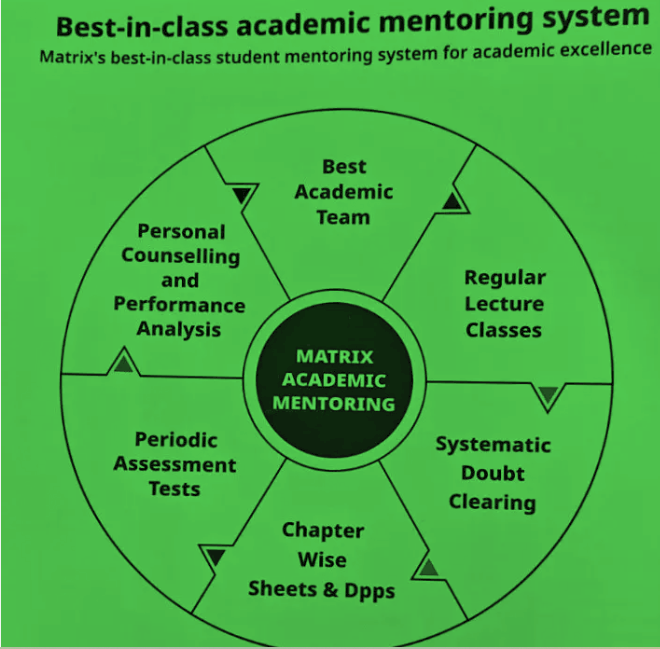
Matrix Academy combines mentoring, doubt-solving, structured tests and residential facilities to address the challenges covered above. Here is how each one helps.
1. Personalised Mentoring for Regular Student Support
Each student at Matrix Academy is assigned a mentor. The mentor tracks the student’s progress, helps identify difficult subjects, sets practical study targets, and is the first person the student can approach when a problem starts. Instead of looking only at marks, mentors help students understand where they are struggling and plan their next steps. Parents who want details on counselling support can ask about it during their visit.

2. Problem-Solving Counters to Stop Doubts from Piling Up
Unresolved doubts add to academic pressure, especially when students are preparing for several subjects at once. Matrix Academy’s problem-solving counters let students get help with difficult questions and concepts, and students can use them outside class hours too. Clearing doubts on time stops backlogs from growing and saves students from revisiting many unfinished topics just before an exam.

3. Structured Testing Instead of Last-Minute Pressure
Matrix Academy follows a structured testing system that combines daily practice problems with regular revision tests and major tests. Regular practice shows students their weak areas throughout the year, so they can work on gaps gradually instead of discovering them just before NEET or JEE.
4. Revision Classes and Digital Support After the Classroom Syllabus
Finishing the classroom syllabus is only one part of preparation. Matrix Academy continues with revision classes until the final exam. Many students find that one particular chapter or unit keeps pulling their scores down. Digital support lets students revisit those weak areas at their own pace.
5. Residential Support for Students Away from Home
For students living away from their families, a well-run hostel makes adjustment easier. Matrix Academy’s hostels focus on security, medical support and a steady daily routine. These cover the practical concerns of both students and parents, and a stable residential routine lets students focus on their studies while they settle in.
6. Conceptual Learning Instead of Rote Pressure
Matrix Academy focuses on conceptual clarity rather than rote learning. When students understand the reasoning behind a topic, they can handle unfamiliar problems without depending entirely on memorisation, which also reduces the fear of “new type” questions in the exam.
What Should Parents Check Before Choosing a Coaching Institute?
Before choosing an institute, parents should look beyond results and ask how students are supported during the toughest months. Use this checklist when you visit:
- Mentoring: Does every student get a named mentor, and how often do they meet?
- Counselling: Is a trained counsellor available, and can students reach them privately?
- Parent communication: Will the institute update you regularly on your child’s progress and well-being, not only on test scores?
- Doubt-solving: Can students get doubts cleared quickly, outside class hours too?
- Testing and feedback: Are tests used to guide improvement, with feedback after each one?
- Revision support: Do revision classes and practice tests continue after the syllabus is completed?
- Hostel safety and routine: Check security, medical support, food, rooms, and the policy on calling family.
Also talk to the institute about your child’s specific needs before admission. After admission, stay in touch without adding pressure. Ask how your child is feeling, not just what they scored.
When Should a Student Seek Professional Help?
Some stress during preparation is normal. But if worry, low mood, anxiety or trouble sleeping continues for weeks, or starts affecting appetite, attendance or daily routine, it is time to talk to a professional. Asking for help early is a sensible step, not a weakness.
Students and parents can call Tele-MANAS, the Government of India’s free 24×7 tele-mental health helpline, on 14416 or 1-800-891-4416. (Source: Tele-MANAS, Ministry of Health and Family Welfare)
Conclusion
Stress, homesickness, and burnout do not mean a student is weak or unfit for NEET or JEE. They are signals that the routine, the support or the environment needs adjusting, and the earlier they are noticed, the easier they are to fix.
If you are a student, start with one change this week: a fixed sleep time, study blocks with short breaks, or a short talk with your mentor. If you are a parent, use the checklist above when you visit an institute, and keep asking your child how they are feeling, not just what they scored.
FAQs
Students face stress because of difficult concepts, a large syllabus, frequent tests, high expectations, backlogs, and pressure to improve their scores.
By watching performance, classroom behaviour, attendance, study habits, and concentration, and through regular one-to-one mentor interactions.
Through a predictable routine, planned family calls, comfortable hostel facilities, approachable staff, chances to make friends and regular check-ins during the first few weeks.
By setting realistic targets, building breaks into the timetable, balancing classes and self-study, helping students manage backlogs, and encouraging enough sleep and physical activity.
Regular mentoring helps students identify difficulties, set practical targets, discuss concerns, close learning gaps, and get personalised guidance throughout their preparation.
Study in blocks with short breaks, move every day, pick three priority tasks each morning, write down worries, keep a fixed sleep time, and talk to someone early.
Normal tiredness improves after rest. Burnout does not: the student stays exhausted after a full night’s sleep, loses interest in studies, and takes in very little despite long hours.
If worry, low mood, or trouble sleeping lasts for weeks or affects daily life. Students can call Tele-MANAS on 14416 or 1-800-891-4416.
Matrix Academy’s hostels focus on security, medical support, and a stable daily routine.
Mentoring, counselling access, parent communication, doubt-solving, testing and feedback, revision support, and hostel safety and routine.